AI Perfume Product Photography Prompts for Premium Ads
Write precise perfume photography prompts for convincing glass, liquid, caps, reflections, fragrance moods, and adaptable luxury campaign compositions.
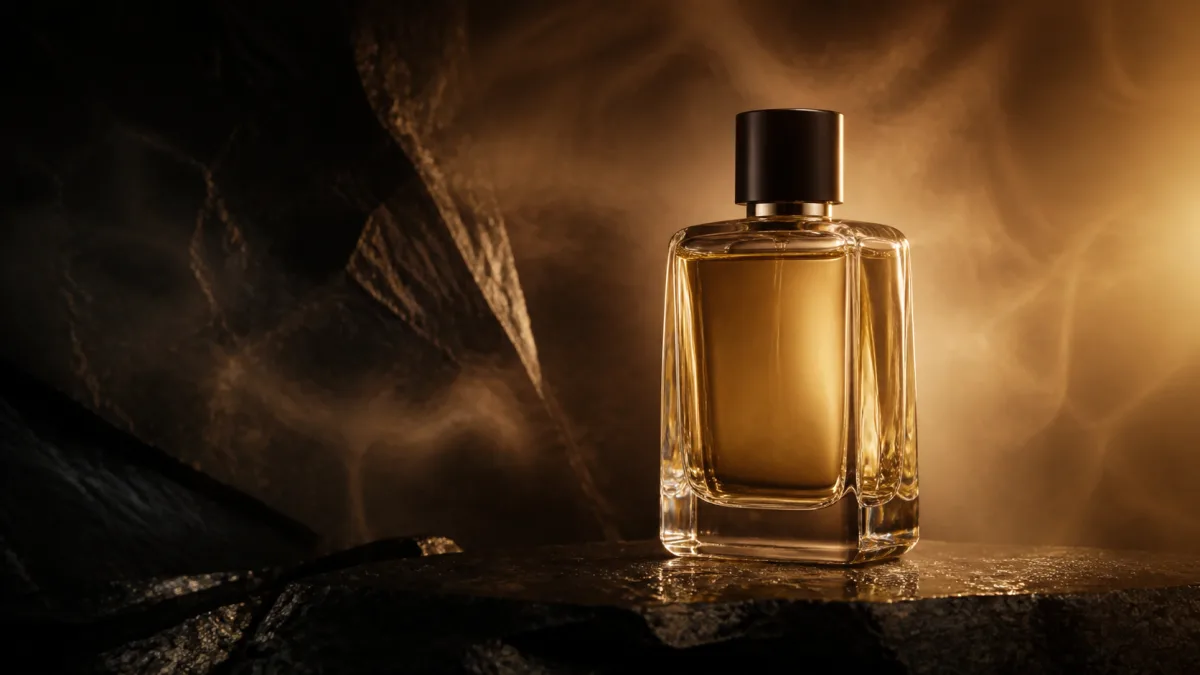
An effective AI perfume product photography prompt defines the bottle as carefully as the fragrance mood. Record its silhouette, glass thickness, liquid color and level, cap material, atomizer position, label area, and exact proportions. Then translate the scent concept into light, surface, palette, and a small number of atmospheric cues. A woody fragrance might use warm side light and dark stone; a fresh composition may use clear reflections and cool daylight. Avoid turning note descriptions into a pile of literal props. The bottle must remain identifiable, physically grounded, and large enough for the intended crop. Verify packaging against the real product and add exact brand lettering afterward.
Separate bottle facts from fragrance storytelling
Perfume advertising has two layers. The bottle is the product and must stay accurate; the setting expresses character. Write them as two prompt sentences so neither gets lost. Describe whether the vessel is square, cylindrical, faceted, rounded, or asymmetrical, and note its base thickness, shoulder, neck, spray hardware, and cap.
For the story layer, choose sensory qualities rather than an inventory of notes: airy, mineral, warm, nocturnal, crisp, smoky, or playful. Then convert that quality into photographic choices such as hard sunset light, translucent shadows, a dark reflective plane, or softly colored haze.
Choose one campaign composition
Decide what the image must do before adding props. A product-detail page needs clean bottle information. A launch banner needs atmosphere plus negative space. A social ad needs a recognizable silhouette at small scale.
Plan from one of these structures:
- Centered bottle on a controlled reflective surface.
- Bottle offset with calm space for a headline and CTA.
- Close crop highlighting glass facets, cap, or atomizer.
- Two-height arrangement for a fragrance pair, with exact bottle count.
- Environmental scene using one scent cue as background context.
The showcase gallery can provide framing ideas. Keep only the elements that reinforce your fragrance's own visual brief.
Copy a glass-aware perfume prompt
Start with this template and replace each bracketed section:
Luxury commercial photograph of one [shape] perfume bottle made from [clear,
frosted, tinted, or faceted] glass, with [glass thickness and base], filled to
[liquid level] with [liquid color]. [Accurate cap material, shape, atomizer, neck,
and label-panel details]. Bottle standing on [surface], photographed from [angle].
Large diffused key light from [direction], narrow rim light defining both glass
edges, controlled refraction, readable liquid line, realistic contact shadow,
[fragrance mood] background in [palette], one subtle [scent cue], [aspect ratio],
negative space on [side]. No extra bottles, no warped cap, no floating glass,
no invented text, no impossible liquid, no excessive sparkles or clutter.
If the bottle has an unusual stopper or sculpted silhouette, give that detail more space and simplify the surrounding scene.
Control transparency, refraction, and highlights
Glass needs edge separation from the background. Ask for a narrow rim light or bright cards reflected along both sides of the bottle. A gentle backlight can reveal liquid color and base thickness, while a broad key provides a clean front gradient.
Avoid “brilliant glare everywhere.” Clipped highlights may erase corners, labels, and cap detail. Request controlled specular highlights and a readable central label area. On a dark background, keep thin bright edges; on a bright background, use a tonal outline, shadow, or slightly darker reflection so clear glass does not disappear.
The same highlight discipline applies to metal and gemstones; see the guide to controlling reflections on small luxury products before adding sparkle or hard specular accents.
Translate scent notes into visual cues
Literal piles of citrus, flowers, wood, spice, and smoke can make a perfume image resemble a grocery display. Select one leading cue and express the rest through palette and light. A bergamot direction might use a single rind curve and clean morning light. A woody direction can rely on warm brown reflections and one sculptural timber plane.
Do not show ingredients as factual formula disclosure unless they are correct. “Mood inspired by cool coastal air” is different from asserting that a specific botanical is present. Keep claims and regulated label information within your approved production workflow.
Use reflections with purpose
A reflection can anchor the bottle and create luxury depth, but it should follow the same perspective and silhouette. Request “subtle partial reflection fading toward the foreground” rather than a perfect mirror duplicate. For a matte stone surface, replace reflection with a soft contact shadow.
Water can suggest freshness, though unrealistic waves around a bottle often distract. If used, define shallow ripples, a stable base, and limited droplets. Paper labels and moisture also need a plausible relationship; a soaked label may accidentally signal poor packaging quality.
Diagnose common perfume prompt failures
If the cap changes shape, move its dimensions and material into the first sentence and remove ornate props. If the liquid line tilts while the bottle stands upright, specify a level horizontal fill line. Thick plastic-looking glass needs clear or lead-free glass language, visible base thickness, controlled refraction, and fewer diffuse highlights.
A duplicated bottle may come from requesting both a strong reflection and a single product. Ask for one bottle plus a partial surface reflection. Random label text is best solved with a blank, straight label panel and later compositing. When flowers hide the bottle, reduce the cue to one background element and state that it cannot overlap the silhouette.
Adapt one idea across campaign sizes
Retain the bottle paragraph, light direction, palette, and surface across formats. Change only crop and negative-space instruction. A square composition can center the bottle; a 4:5 ad can place it low with vertical atmosphere; a wide hero can move it to one third of the frame.
The AI image generator can help create these variants. Keep a simple campaign note containing the exact bottle description, approved palette, reflection rule, and excluded elements so later images remain related.
Use the commercial product-photography framework to turn that campaign note into a repeatable catalog, lifestyle, and banner set.
Complete the perfume pre-publish check
Inspect the final image at full and mobile sizes:
- Bottle silhouette, glass thickness, cap, neck, and atomizer match.
- Liquid color, level, and refraction are physically coherent.
- Highlights outline the vessel without covering important detail.
- Contact shadow or reflection aligns with the bottle and light.
- Scent cues remain secondary and factually appropriate.
- No extra package, accessory, or gift component is implied.
- Label area can accept exact approved typography.
- Crop preserves bottle recognition and intended text space.
Use one factual bottle description and one sensory direction, then create a perfume campaign concept. Get the glass, cap, and liquid right first; atmosphere becomes more persuasive when it surrounds a believable product.
Related guides
Browse all ai product photography guidesAI Product Lifestyle Photo Prompts for Believable Scenes
Build lifestyle product prompts around a real customer moment, accurate scale, product-lock details, coherent light, restrained props, and review.
How to Turn a Phone Product Photo into a Studio Image
Prepare a stronger phone reference, write a bounded studio-image prompt, protect product details, and review lighting, edges, labels, and shadows.
A Practical Seedream Product Photography Prompt Guide
Structure Seedream product photography prompts around product facts, scene choices, light, composition, constraints, and a careful review process.
Last updated .