AI Product Lifestyle Photo Prompts for Believable Scenes
Build lifestyle product prompts around a real customer moment, accurate scale, product-lock details, coherent light, restrained props, and review.
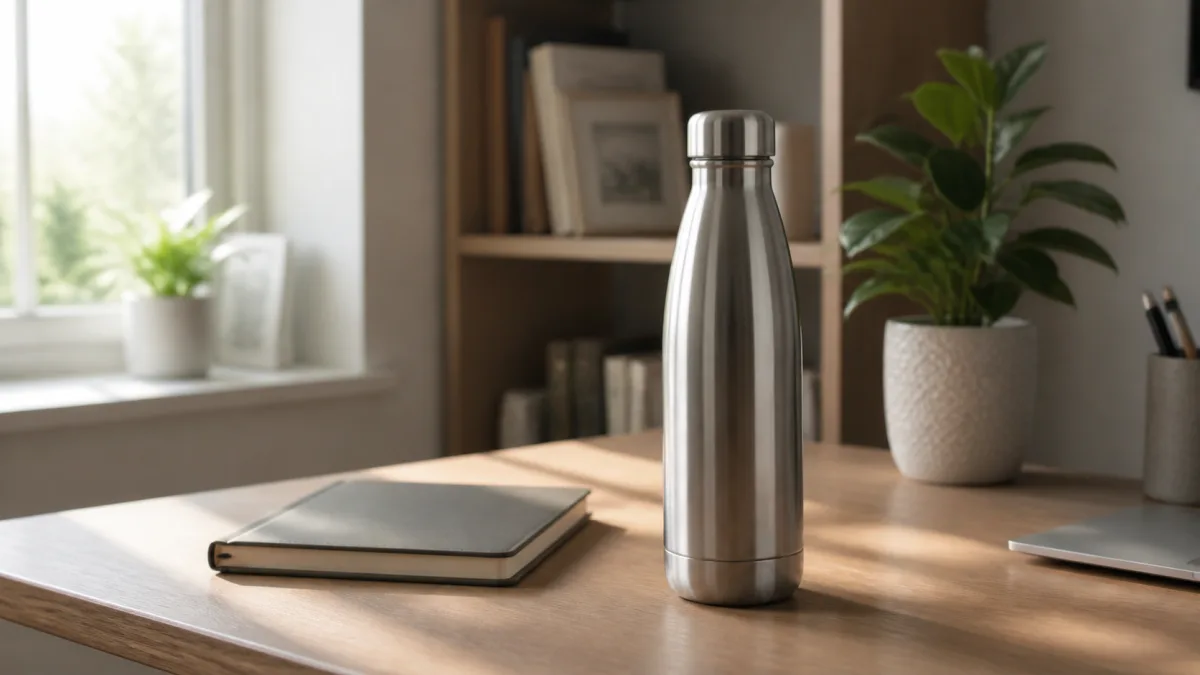
Effective AI product lifestyle photo prompts begin with one believable customer moment. Define who is using the product, where, what action is happening, and what the image must communicate. Lock the real product's shape, color, material, scale, label, and included parts before describing the scene. Then choose a camera view, one light source, a small prop family, and a final aspect ratio. Lifestyle context should clarify use rather than invent performance, size, accessories, or claims. When the scene represents a real SKU, compare every result with the source and reject images that make the story more attractive by changing the product.
Write the customer moment in one sentence
Begin with a simple scenario: a commuter placing an insulated bottle beside a laptop, a parent arranging a handmade night light on a nursery shelf, or a baker setting a mixing bowl on a bright kitchen counter. The moment should show use, audience, and environment without becoming a full advertisement script.
If you cannot summarize the scene in one sentence, it may contain too many ideas. Explore compositions in Showcases, then select one action and one focal product.
Keep the product identity separate from the story
The story is editable; the product is not. Create an identity block with geometry, proportions, true color, material, finish, label, logo, text, hardware, and included parts. State the real dimensions or relative scale when that matters.
Then create a scene block with location, person or hand, action, surface, props, and mood. Separating the blocks makes it easier to detect when creative direction has accidentally authorized a product change.
Show use without making unsupported claims
A lifestyle image can demonstrate a plausible context, but it should not imply performance that has not been established. Avoid visual stories that suggest unsupported waterproofing, medical outcomes, extreme durability, food safety, or included accessories.
Use observable actions: holding, placing, opening, arranging, carrying, or viewing. Keep any result-related message in verified copy outside the image rather than asking the generator to invent visual proof.
Protect scale and human interaction
Hands and bodies can help explain size, but they also introduce errors. State the product dimensions and how it sits relative to a familiar object. Ask for a natural grip that does not cover the label or alter the product shape.
For a small item such as jewelry, a real on-body source may be more accurate than generating a new hand. For furniture or wall decor, use room context cautiously and compare the apparent scale with actual measurements.
Choose a camera position that supports the action
An eye-level three-quarter shot feels observational and works for many desk, kitchen, and home scenes. An overhead view clarifies arrangements. A closer crop emphasizes hands and texture, while a wider environmental view needs more careful scale and perspective control.
Write the final placement into the prompt. A wide website banner needs negative space; a vertical social image needs a clear central action; a square product card should not bury the product in a large room.
Use props as context, not decoration
Limit props to items the customer moment requires. A desk scene might need a laptop, notebook, and pen, not an entire office. A kitchen scene might use one ingredient family and a linen. State whether props are soft-focus and make the product the sharpest, most prominent object.
Avoid recognizable third-party logos and packaging unless they are necessary and authorized. Generic, brand-free context is easier to control.
Copy-ready lifestyle product prompt
Use the uploaded image as the exact product reference. Preserve the [product]'s complete shape, proportions, true color, material, finish, label, logo, text, hardware, included parts, and real scale. Show one believable customer moment: [person or hand] [simple action] in [specific location]. Place the unchanged product [position and relation to user or surface], keeping its identifying details visible. Compose the image as a [wide / square / vertical] [placement] in [aspect ratio], viewed from [camera angle]. Use [natural or studio light] from [direction], coherent shadows, and realistic material reflections. Add only [small relevant prop family], slightly secondary in focus. Leave negative space on [side] if required. Do not alter the product, invent accessories, exaggerate size, add unsupported performance cues, obscure the label, add branded props, duplicate objects, distort hands, or add a watermark.Shape the scene in the AI image generator, then move the final prompt into Create.
Common lifestyle failures and fixes
If the product shrinks or grows, state its dimensions and relationship to a known surface or hand, then reduce the number of scene elements. If hands deform or cover the label, simplify the action or remove the person and use an environmental still life. If the product color changes, request neutral light on the item and move mood color into the background.
Overly staged scenes usually come from vague luxury or aspirational language. Replace it with a real surface, time of day, light direction, and one natural action. If accessories appear that are not included, name the exact allowed props and explicitly keep them separate from the product.
Create a useful three-image lifestyle set
Plan three distinct jobs: an in-use close view, a wider environmental scene, and a detail image showing material or interaction. Keep product identity, customer profile, color treatment, and light direction related across the set.
Each image should answer a different question. Repeating the same product on three decorative tables adds volume but little information.
Pre-publish lifestyle checklist
- Product geometry, color, material, label, logo, parts, and scale match the source.
- The action is plausible and does not imply unsupported performance.
- Hands, bodies, furniture, and room perspective look coherent.
- Props are relevant, separate, and not mistaken for included items.
- Lighting, shadows, and reflections fit the location and material.
- The product remains the clearest focal point at final display size.
- No invented text, brand mark, badge, result, or duplicate object appears.
- Full-resolution review and source comparison are complete.
Write one customer moment and one product identity block before adding style language. Then open Create, generate a focused scene, and refine the story only after the product remains accurate.
Related guides
Browse all ai product photography guidesHow to Turn a Phone Product Photo into a Studio Image
Prepare a stronger phone reference, write a bounded studio-image prompt, protect product details, and review lighting, edges, labels, and shadows.
A Practical Seedream Product Photography Prompt Guide
Structure Seedream product photography prompts around product facts, scene choices, light, composition, constraints, and a careful review process.
How to Fix Product Photo Shadows and Reflections with AI
Diagnose floating objects, double shadows, harsh glare, and fake reflections, then write bounded AI edit prompts that protect product identity.
Last updated .