
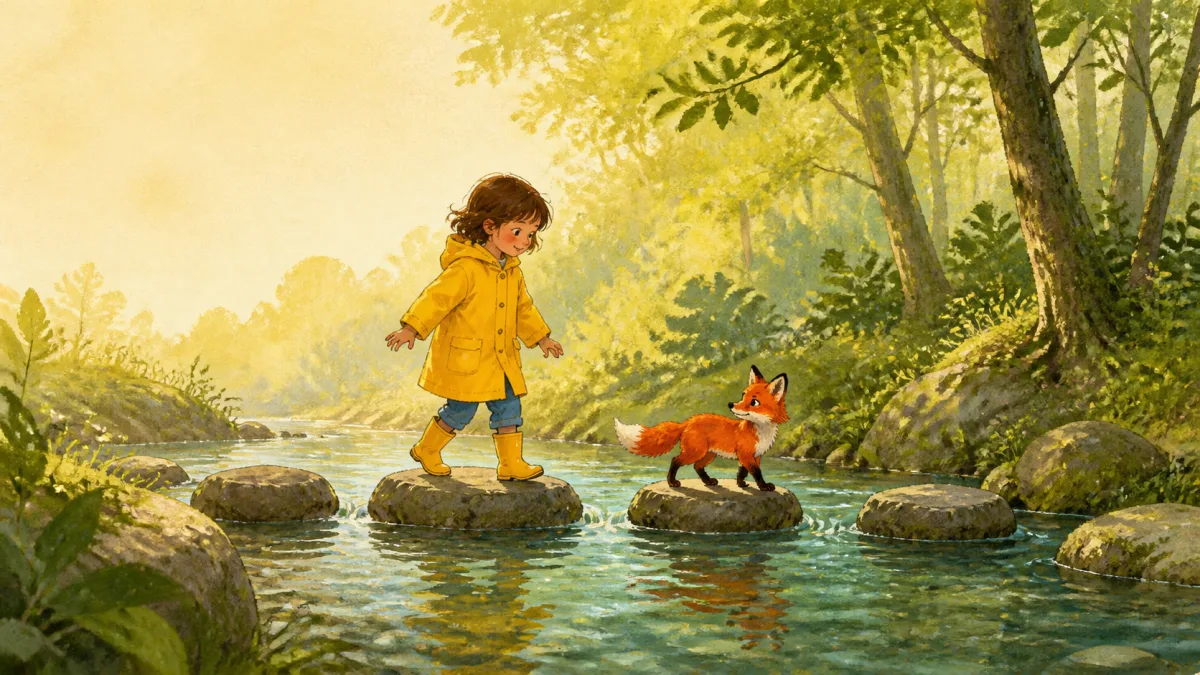
Strong AI children's book illustration prompts describe the story beat, character continuity, emotional action, setting, camera distance, page role, and space needed for live text. Build a written character sheet and visual world guide before generating finished scenes. For each page, state what changes and what remains fixed, then compose around the reader's eye path rather than listing every sentence as an object. Keep generated words out of the artwork, protect faces and gestures from the gutter and trim, and review cultural details, anatomy, continuity, and emotional clarity. Use AI output as material for an edited illustration workflow, not as a substitute for authorship or art direction.
The consistent children's book character prompts in this guide begin with those fixed story and design decisions.
Define the story beat on each page
An illustration should reveal an action, emotion, discovery, or change. Summarize the page in a sentence such as "Mara hesitates at the stream while the fox demonstrates the first safe step." This is more useful than pasting a full paragraph into the prompt.
Identify whose feeling matters, what the reader should notice first, and what detail can reward a second look. Do not illustrate every noun. Select the moment that advances the story and let the text handle information outside the frame.
Create a character continuity sheet
Before generating scenes, record visible traits in stable language:
- Age range and body proportions appropriate to the story
- Face shape, skin tone, hair texture, and hairstyle
- Clothing pieces, colors, footwear, and recurring accessories
- Typical posture, expressions, and scale beside other characters
- Features that may change, such as a raincoat or emotional state
- Features that must remain fixed across the book
Make similar notes for animal characters, vehicles, and important objects. A character's name alone does not preserve design. Keep an approved front, side, and expressive reference where your workflow supports references.
Build a visual world guide
Define the medium, line quality, palette, light behavior, environment, and level of detail. Describe these properties directly rather than asking for a named illustrator's style. Decide how interiors and exteriors relate and which recurring colors identify characters or places.
Gather composition and material ideas from Showcases, but make the world original to the manuscript. Do not include copyrighted characters, franchise symbols, or recognizable compositions from another book.
Compose around page type and text
Mark whether the image is a single page, full bleed, spot illustration, or spread. For a spread, protect faces, hands, and key objects from the center gutter. Reserve a calm area for typeset copy based on the real page layout, and keep its contrast consistent.
Vary camera distance across the sequence. Establishing views explain place, medium views show action, and close views reveal emotion. Repeating the same centered full-body composition on every page makes a story feel static even when the prompts describe different actions.
Copy-ready scene prompt
Create an original, text-free children's book illustration for this story beat:
[one-sentence action and emotional change]. Keep the approved character design
exact: [short fixed description of character, clothing, proportions, and key
features]. Show [character] [specific action] with [other character or object]
in [setting and time]. The emotion should read through [expression, posture, or
gesture]. Use [page type and camera distance], place essential faces and hands
away from the trim and gutter, and reserve a calm [location] area for text added
later. Maintain [medium, palette, line quality, and lighting] from the world
guide. No words, letters, logos, watermarks, copyrighted characters, extra
limbs, changed clothing, inconsistent scale, or unrelated background events.
Draft the story beat with the AI image generator, then open Create to correct one continuity or composition issue at a time.
Preserve action and emotional clarity
Describe physical relationships: who faces whom, which hand holds the object, where feet meet the ground, and what direction a character moves. Keep poses simple enough to read at the final page size. Expressions should match the scene rather than defaulting to the same broad smile.
For sensitive moments, avoid visual exaggeration that undermines the text. Check whether fear, grief, disability, family structure, and cultural identity are represented with care and whether an appropriate reader or specialist review is needed.
Fix common illustration failures
If the character changes, shorten the scene prompt and restate fixed traits before adding environment. Compare clothing, hair, face, proportions, and accessory placement against the approved sheet. If a spread feels crowded, remove decorative objects and give the story action a clearer silhouette.
When text space fills with branches or props, specify its location, tone, and prohibited elements. If hands or animal legs fail, simplify the action or revise the affected area rather than regenerating a completely different scene. If every page uses the same angle, plan the sequence as thumbnails and intentionally vary distance and direction.
Review continuity as a sequence
Place all pages in order and inspect more than individual beauty. Track time of day, weather, object ownership, character scale, travel direction, clothing state, and which story information has already appeared. A lovely page can still break continuity with the pages around it.
Check pacing as well. Quiet scenes need visual room; climactic moments may use stronger diagonals or closer framing. Preserve the same world rules while allowing the composition to respond to the narrative.
Prepare responsible delivery files
Keep text editable and separate from the artwork. Use the current printer or distribution template for trim, bleed, margins, gutter, color settings, and export format. Requirements vary with page count, binding, format, and supplier, so verify them before final layout.
Retain prompt notes, approved references, editable art, licenses, type files, and a clear record of human corrections. If the book represents real people or a specific community, secure appropriate permissions and review rather than assuming a generated depiction is accurate.
Children's book illustration checklist
- The picture advances one clear story beat.
- Character face, proportions, clothing, colors, and scale remain consistent.
- Expression, pose, gaze, and object relationships communicate the intended emotion.
- Page and spread compositions protect type, trim, and gutter areas.
- Background detail supports the scene without competing with the action.
- Cultural, historical, and accessibility details receive appropriate review.
- No accidental text, anatomy defects, copied styles, or protected characters remain.
- Sequence continuity and current production specifications are checked before export.
Select one scene that changes the character's understanding, write its beat in one sentence, and create the text-free draft in Create. Review it beside the previous and next pages before approving the illustration for layout.